


-
About UsYongbang dry spirit of enterprise is "practical work, humility, peaceful competition, development and development". It is under the inspiration of this spirit that we have embarked on the road of establishing and building Yongbang enterprises. Yongbang Dry and Yongbang Intelligence are a group of young intellectuals. We follow the behavior principle of "peaceful competition, development and development". To be the master of modern economy and the standard bearer of new energy equipment.

-
Products
-
-
-
News Center

PRODUCT CENTER
Products
Products
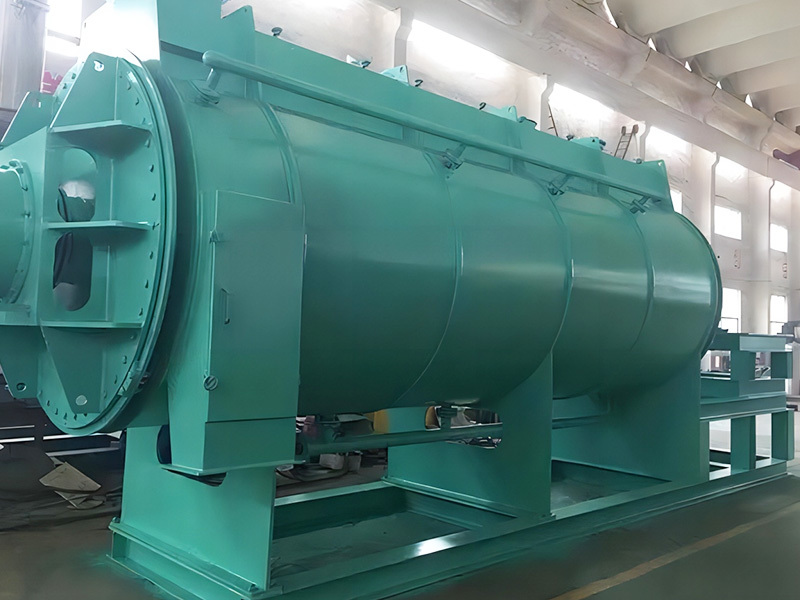
Disc dryer as an indirect heating drying equipment has been used in the chemical industry, food industry and feed industry for decades. The main body of the disc dryer is composed of a cylindrical shell and a set of discs through the center. The heat medium flows through the hollow disc group and transfers heat indirectly to the material through the discs. The material passing between the disc and the shell is heated by the heat conduction of the disc and evaporates water. The water vapor formed by drying is gathered in the dome above the disc and taken out of the dryer by a small amount of hot air. The disc dryer uses the double-sided heat transfer of each disc to provide a large heat exchange area in a small space, which makes the disc dryer compact.
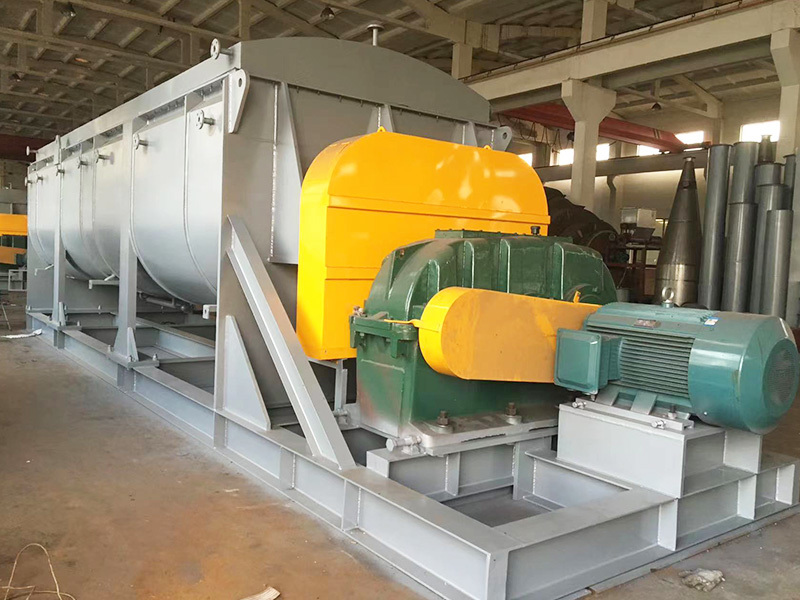
Yongbang company is a professional manufacturer of blade drying machine. The blade drying machine with wedge-shaped structure is the first generation of traditional products in China. It is a low-speed stirring drying machine with conduction heating. A jacket is arranged on the dryer cylinder, and a hollow paddle is arranged on the hollow shaft, in which a heat carrier is introduced. Under the agitation of the stirring paddle, the wet material conducts sufficient heat and mass transfer with the cylinder and the hot surface of the paddle to achieve the purpose of drying. The structure is generally horizontal, biaxial or four-axis form.
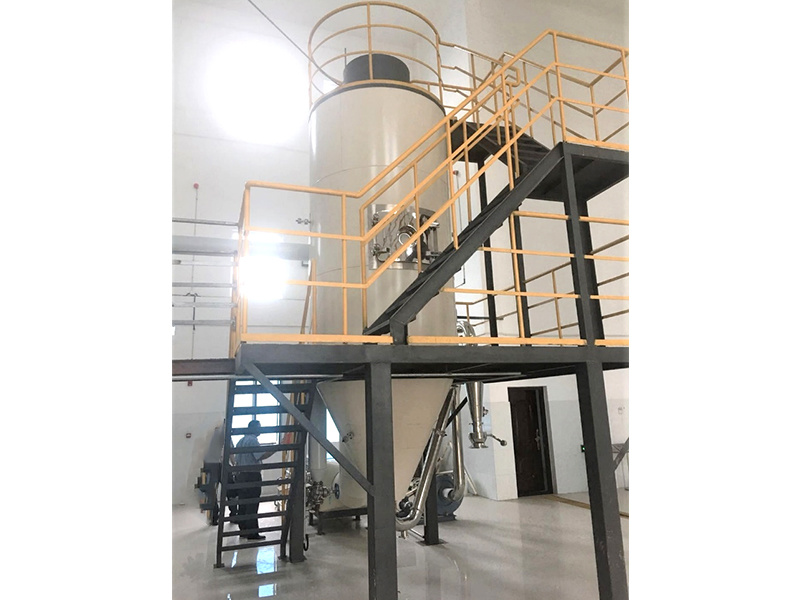
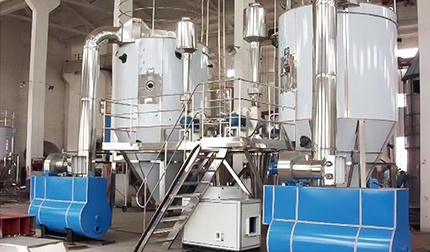
The working process of the unit is that the feed liquid is fed through the diaphragm pump under high pressure to spray mist droplets, and then flows down in parallel with hot air. Most of the powder particles are collected by the discharge port at the bottom of the tower. The waste gas and its fine powder are separated by the cyclone separator. The waste gas is discharged by the exhaust fan. The powder is collected by the pollination cylinder located at the lower end of the cyclone separator.
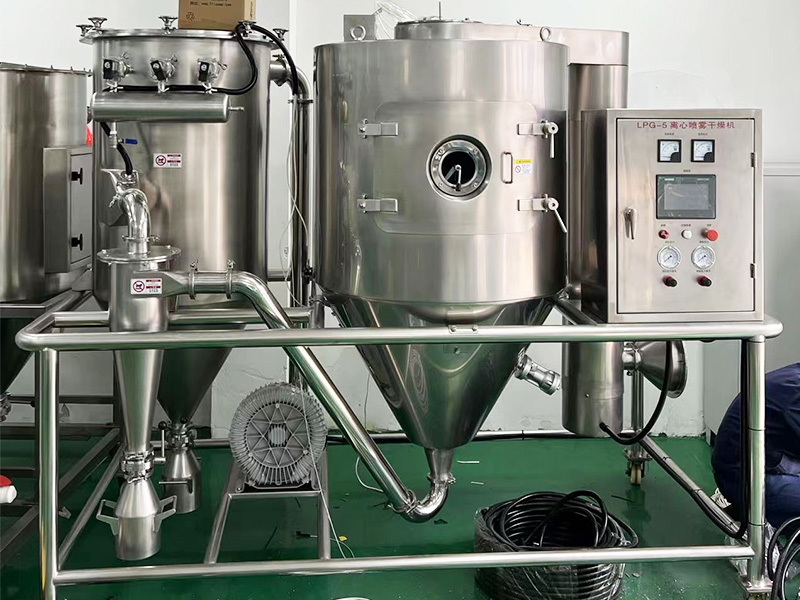
Centrifugal spray dryers are divided into open type and closed type. They are mainly used in the drying production of battery materials, positive and negative electrode materials and sodium ion materials. They adopt high-speed centrifugal spray atomization technology (linear speed can reach 250 m/s) which is in line with the most advanced international technology. While realizing continuous drying production, they can obtain micro-spherical particles with uniform particle size, compact structure and good fluidity. To a large extent, high-speed centrifugal atomization technology, it can effectively improve or increase the packing density of the positive electrode material lithium iron phosphate, so that the monomer particles can reach 3 ~ 5μm and the moisture content of the finished product is 0.5%. The magnetic filtration technology is applied to effectively avoid the incorporation of iron ion impurities in the production process, so as to achieve the purpose of material purity and maintain the conductivity of the positive electrode material. The recycling of waste heat gas can achieve the production purpose of energy saving and emission reduction, and conform to the energy saving and emission reduction and low-carbon production mode advocated by the state.
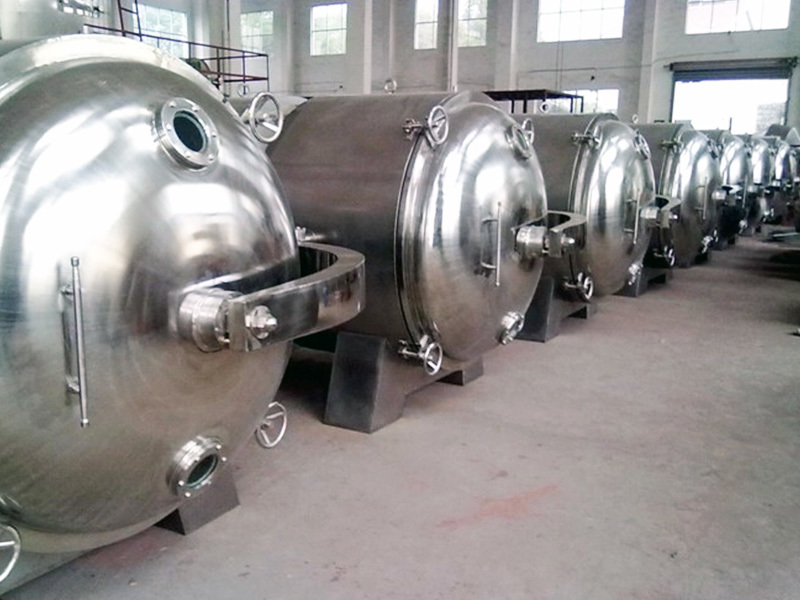
Vacuum drying is to dry the material to be dried by heating under vacuum conditions. It uses a vacuum pump for pumping and dehumidifying, so that the studio is in a vacuum state, the drying rate of the material is greatly accelerated, and energy is also saved. Note: If a condenser is used, the solvent in the material can be recovered through the condenser; if SK series water ring vacuum pump or ZSWJ series hydraulic jet vacuum pump unit is used, the condenser is not needed, saving energy investment.
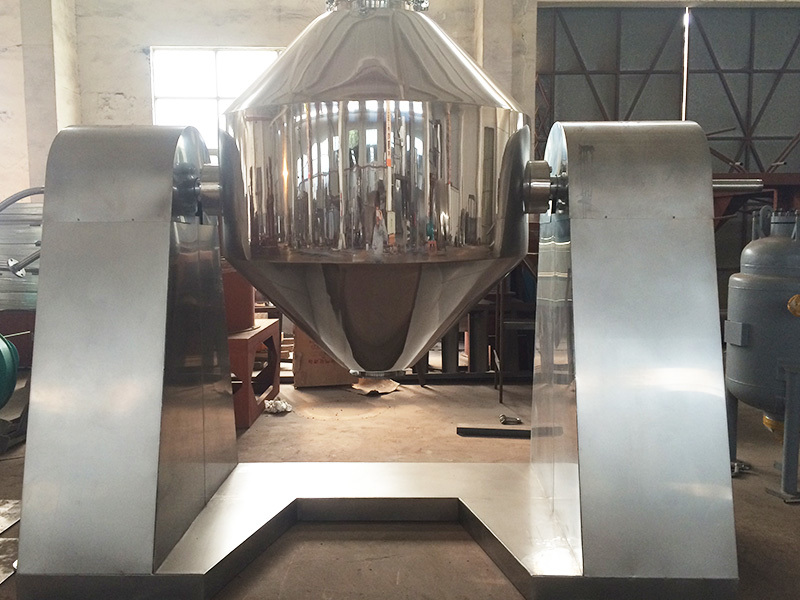
The special double-cone rotary vacuum drying host for battery materials is a double-cone tank body. Under the vacuum state inside the tank, steam or heat transfer oil can be introduced into the jacket to heat the inner container. The heat is transferred to the wet material through the inner container, so that the water in the wet material is gasified. The low-speed motor drives the tank body to rotate. The material keeps going up and down, turning inside and outside, and replacing the heating surface. At the same time, the water vapor is continuously pumped away through the vacuum exhaust pipe of the vacuum pump, which speeds up the drying speed of the material and finally achieves the purpose of uniform drying.
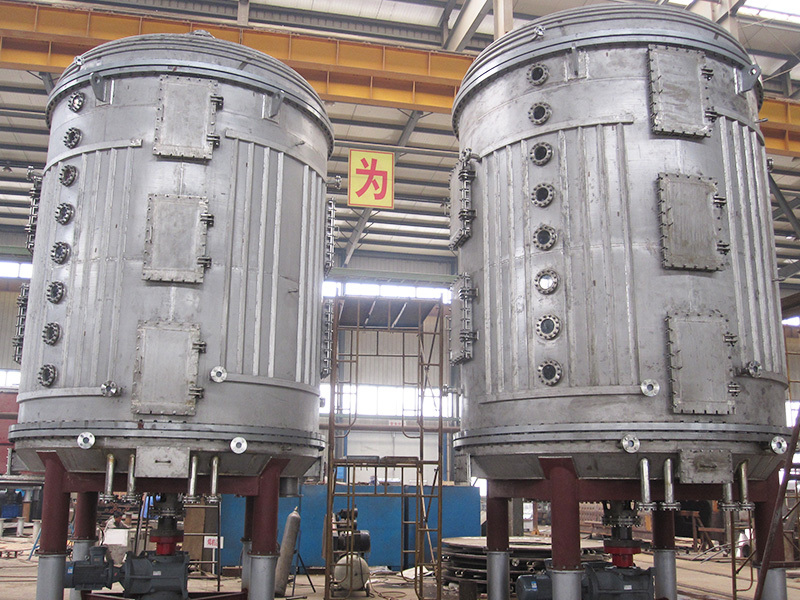
Disc dryer, also known as disc dryer, or plate dryer (Plate Dryer), is a kind of mechanical stirring conduction drying equipment, developed on the basis of fixed bed conduction dryer and rake type stirring conduction dryer. In the 1950 s and 1960 s, the former Soviet Union had already used it to dry large quantities of lignite. However, due to the low level of industrialization at that time, the price of this complex drying equipment was too high, and it was difficult to promote it to other industries. It was also replaced by a tubular dryer with lower operating cost in the coal industry. The progress and development of the dryer was limited. Tong Rongliang San only cited one example of inorganic salt in the application of disc dryer in his 1975 edition of "Drying Device. By the end of the 1970 s, with the continuous progress of production methods in various industrialized countries, processing costs are no longer the main problem that plagues people. Coupled with the use of new materials and the shortage of energy in the entire range, disc dryers With its outstanding energy-saving advantages, it has once again entered people's field of vision. Germany, Belgium, Japan, the United States, Russia and other countries have specialized companies to research and manufacture disc dryers. Among them, the German Krauss-Maffei Company, which has a long history and is more successful, has developed and manufactured a series of products of TT/TK (normal pressure type), GTT (closed type) and VTI (vacuum type) tray dryers, and has successfully extended it to the chemical, food and pharmaceutical industries, evolving from the eldest black coarse equipment for drying coal to modern fine chemical equipment.
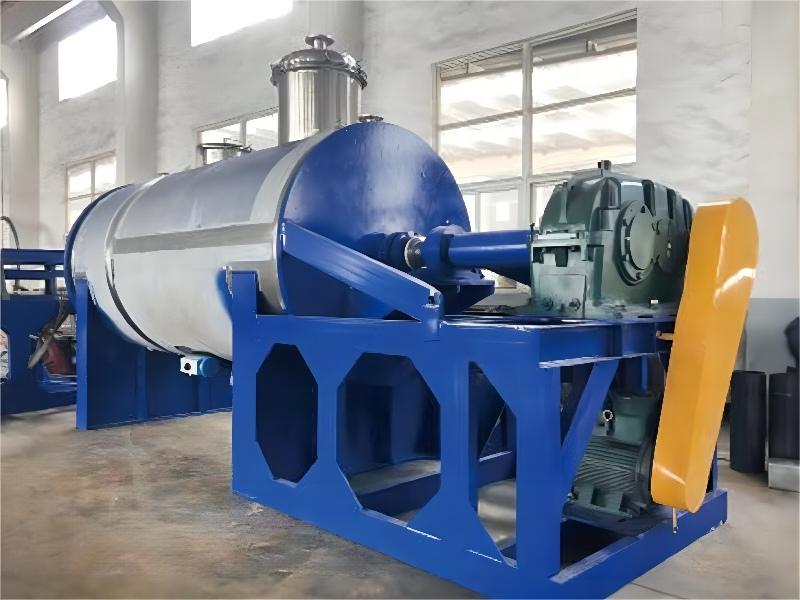
ZPG series battery material horizontal stirring vacuum dryer is the use of water in the material in the vacuum state to reduce the boiling point of the characteristics of the equipment for drying. The equipment uses steam (hot water, heat conduction oil) to heat the jacket indirectly, and the water is evaporated and pumped out in time. Inside the dryer shell, the rake tooth is driven by the transmission shaft, and the rake tooth end is designed to have a certain angle with the axis. The main shaft rotates forward and backward to move the material along the axial direction to facilitate drying and discharging. Two or four percussion rods can be added inside the shell to facilitate the rapid drying and crushing of the material. The percussion rod is a hollow thick-walled stainless steel tube with the same length as the shell, which moves freely inside the shell. The percussion rod continuously knocks the material inside, so that the material is continuously broken (the material obtains a larger specific surface area) to accelerate the drying process, and the quality of the finished material is better.
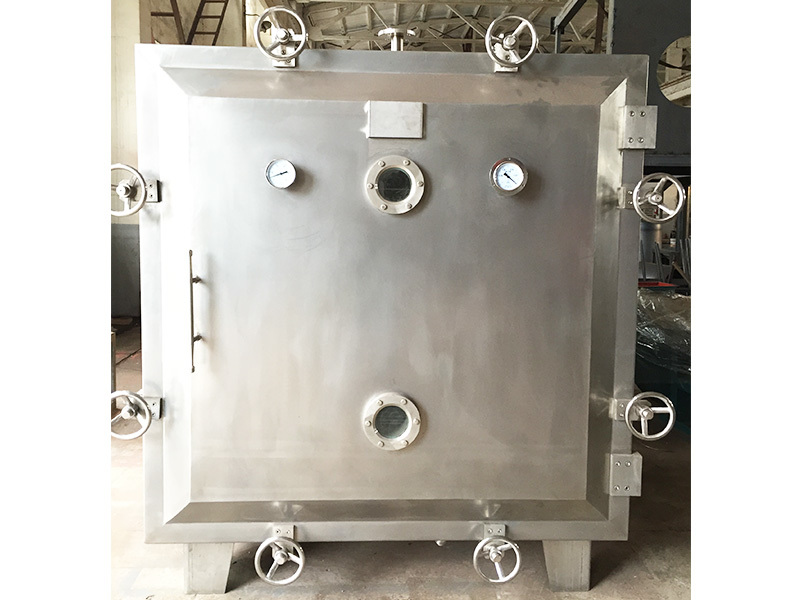
Vacuum drying is to dry the material to be dried by heating under vacuum conditions. It uses a vacuum pump for pumping and dehumidifying, so that the studio is in a vacuum state, the drying rate of the material is greatly accelerated, and energy is also saved. Note: If a condenser is used, the solvent in the material can be recovered through the condenser; if SK series water ring vacuum pump or ZSWJ series hydraulic jet vacuum pump unit is used, the condenser is not needed, saving energy investment.
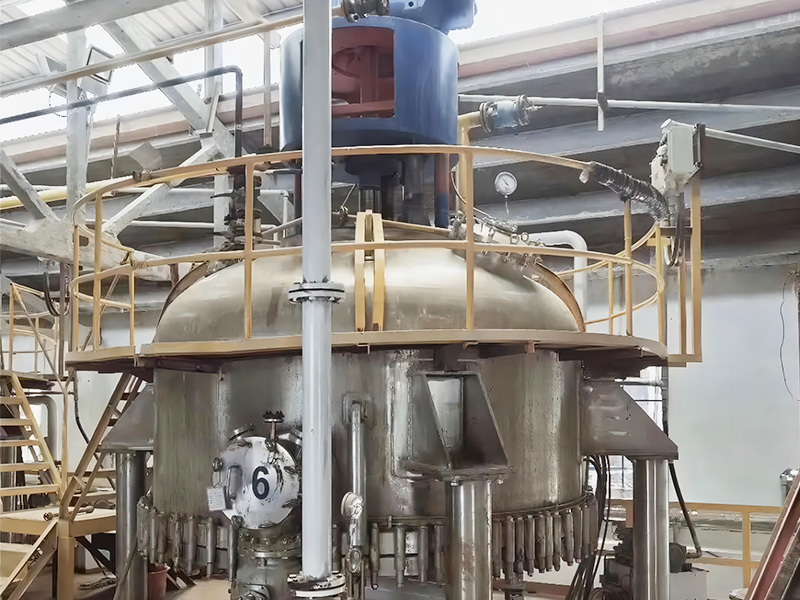
The filter washing dryer (commonly known as "three in one" in the industry) can realize the continuous process of material filtration, washing, drying, sterilization and unloading. Its operation mode belongs to batch operation (intermittent operation), which is widely used in pharmaceutical, food, pesticide, chemical and other fields, and can avoid material loss, pollution and environmental pollution caused by material transfer process. The existing three-in-one structure is a flat plate type, but some defects are found in long-term production and use, such as: the circular flat bottom filter area is small; the side discharge, resulting in incomplete discharge; the drying effect is not ideal, and the material in the drying process is turned Small, low heat exchange efficiency, limited drying effect, etc.
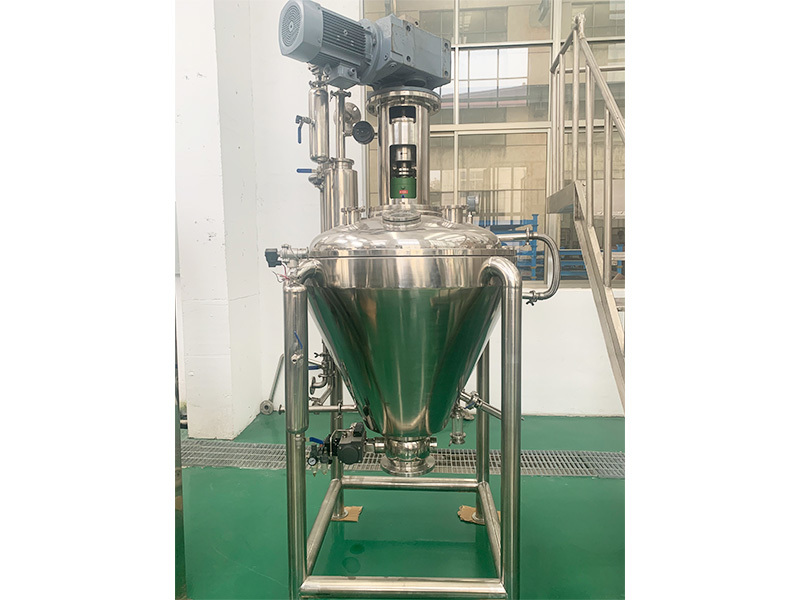
The vacuum single cone dryer developed by Yongbang Drying is a high-efficiency multifunctional fully closed vertical vacuum drying equipment integrating decompression distillation, crushing, powder mixing and drying. The drying efficiency of the fully closed vertical vacuum spiral belt dryer is 3-5 times that of the double cone rotary vacuum dryer and vacuum box drying of the same specifications. The vacuum single cone dryer combined with special drying process can adapt to the drying of materials with high viscosity, poor thermal penetration, easy to roll and easy to clump into blocks.
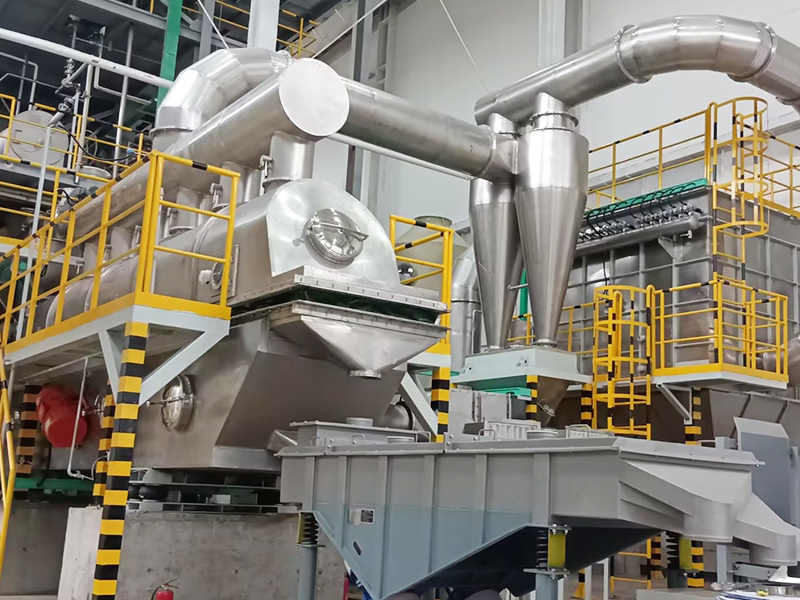
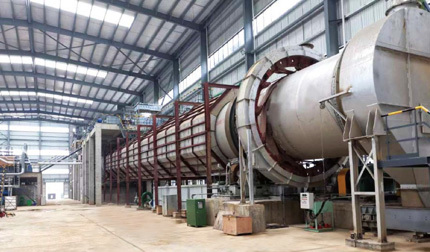
The material enters the bed through the feed inlet, and jumps forward on the air distribution plate under the action of the exciting force provided by the vibration motor or other means. At the same time, the air is heated to a certain temperature after being filtered, and enters the downwind chamber of the dryer through the tuyere. The material is under the dual action of the vibration force and the hot air flow through the air distribution plate, in the suspended state, there is intense turbulence between the material particles and the heat medium in contact with the hot air flow, which strengthens the heat and mass transfer process. The dried product is discharged from the discharge port, and the evaporated water and waste gas are discharged into the atmosphere after dust is recovered by the cyclone separator.
Service Hotline
Address: No. 28, Park Road, Bieqiao Town, Liyang City, Changzhou City, Jiangsu Province, China
E-mail: yongbang@jsybzn.cn

WeChat public number
Get more services

Copyright©2024 Jiangsu Everland Intelligent Equipment Technology Co., Ltd. www.300.cn | SEO