


-
About UsYongbang dry spirit of enterprise is "practical work, humility, peaceful competition, development and development". It is under the inspiration of this spirit that we have embarked on the road of establishing and building Yongbang enterprises. Yongbang Dry and Yongbang Intelligence are a group of young intellectuals. We follow the behavior principle of "peaceful competition, development and development". To be the master of modern economy and the standard bearer of new energy equipment.

-
Products
-
-
-
News Center

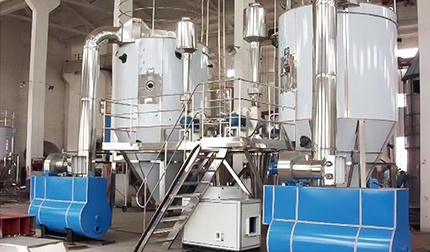

Papua New Guinea PLG-M type nitrogen circulating disc dryer
Product Description
Overview
Nitrogen circulating disc dryer is the optimization and upgrading of traditional explosion-proof disc drying technology. It can solve the problems of organic solvent recovery, easy oxidation and drying of toxic materials. It is suitable for free-flowing, non-adhesive, extremely fine powder (below 100 mesh) and granular materials with wide particle size distribution, drying of materials containing organic solvents and recovery of organic solvents.
Equipment Overview
Nitrogen circulating disc dryer adopts many new technologies such as closed circulation system, differential pressure automatic transmission, on-line oxygen detection, spray and solvent recovery and intelligent automatic control. It is the optimization and upgrading of traditional explosion-proof disc drying technology, which can solve the drying problems of organic solvent recovery, easy oxidation and toxic materials, and is safe, environmentally friendly and energy-saving, suitable for free-flowing, non-binding, very fine powders (up to 100 mesh) and granular materials with a wide particle size distribution, as well as materials containing
Drying of organic solvent materials and recovery of organic solvents
Nitrogen circulating tray dryers are particularly targeted at organic solvents (such as alcohols, acetone, NMP, DMF, etc.), replacing the usual air solvent with an inert gas medium formed by circulating nitrogen. According to the characteristics of low flash point or slightly toxic, flammable and explosive of organic solvents, the following protective measures are specially designed: explosion-proof of layer nitrogen: according to the nature of inert gas of nitrogen, the whole pipeline adopts nitrogen circulation, and the system with oxygen content below 3% can operate normally. The second layer of industrial control explosion-proof: the pressure is higher than 3000pa, the safety valve is opened, and the pressure can be released. Explosion-proof sheet of the third layer: when the pressure in the cavity of the disc dryer system rises abnormally, the explosion-proof sheet at the top of the tower will automatically open and vent the explosion. Fourth layer explosion-proof machine: internal ventilation system, suitable for harmful gases. It can prevent oxidation, avoid danger and improve quality, and realize sterility and dust-free.
Working principle
Drying process: the heat carrier is introduced into a fixed multi-layer hollow disc, the wet materials in contact with the metal disc surface are indirectly heated by conduction, and the water in the moving material is continuously evaporated and vaporized at the boiling point when it is in the operating state under the mechanical stirring action similar to the plough-shaped rake blade, and the moisture leaves the equipment from the moisture discharge port, thus obtaining a qualified dry finished product at the bottom.
Before using the nitrogen circulating disc dryer, nitrogen is used to replace the air in the system, so that the oxygen content in the system reaches the safe concentration of the solvent. Wet materials in a closed container, from the equipment on the feed into the drying host. The blower sends the filtered nitrogen, which is heated by the heater to the temperature required for the drying process, and enters the disc dryer to bring out the moisture after evaporation. In the drying process, the hot and humid gas with a small number of micro-powder through the dust collector will be all more than 2um micro-powder in the dust collector for gas-solid separation. The solid dust is collected in the dust collector, and the gas enters the multi-stage condenser (the pressure drop of the finned condenser is small and the condensation effect is good) to condense the solvent in the hot and humid gas. The condensed solvent is collected by the collection tank and stored (zero emission to the air and can be recycled). The dry nitrogen after condensation and dehumidification is then sent to the heater for recycling through the blower.
Benefits Description
After drying in a nitrogen circulating tray, the hot moisture containing the solvent enters the condenser to condense the solvent in the gas (the recovery rate of the solvent is above 95%), which can not only recover the solvent but also condense the dehumidified dry gas. The recovered solvent can be recycled again, which can save costs and will not cause environmental pollution due to exhaust emissions. The hot and humid gas is dehumidified by condensation, the humidity in the gas is low (compared with ordinary boiling drying), the drying capacity becomes stronger, and it is more suitable for moisture-absorbing materials that are easy to influence the humidity environment.
Nitrogen circulating disc dryer is a fully enclosed structure. Inert gas (such as nitrogen) is filled inside the equipment. When anaerobic materials or materials containing flammable and explosive solvents are dried, there is no oxygen in the gas and it cannot be burned or oxidized. It can effectively avoid fire or explosion accidents during production, so it is safer than ordinary equipment.
Vertical installation, perfect insulation, high utilization rate of heat source and waste heat. Evaporation of water per kilogram of only 1.1~1.4kg steam. In addition, the required power is only about 1/10 of the rotary cylinder dryer, which is economically feasible.
Exhaust gas or steam discharge speed is low, dust flying less, can meet the requirements of the three waste emission standards, improve the working environment. It is particularly suitable for the drying of pesticide raw materials without the need to attach dust removal equipment.
The temperature of each layer tray can be controlled to achieve the specified temperature distribution. Drying and cooling can obtain dry products with uniform quality and low mechanical stress. If properly combined with other equipment, solvents and dry paste materials can be recovered, and can also be used for thermal processing of various products such as roasting and sublimation.
Service Hotline
Address: No. 28, Park Road, Bieqiao Town, Liyang City, Changzhou City, Jiangsu Province, China
E-mail: yongbang@jsybzn.cn

WeChat public number
Get more services

Copyright©2024 Jiangsu Everland Intelligent Equipment Technology Co., Ltd. www.300.cn | SEO